This session is part of two comprehensive series:
26th Annual Therapies in the School Conference PROGRAM B – ON-DEMAND 12
and
26th Annual Therapies in the School Conference – ON-DEMAND 12
COURSE DESCRIPTION:
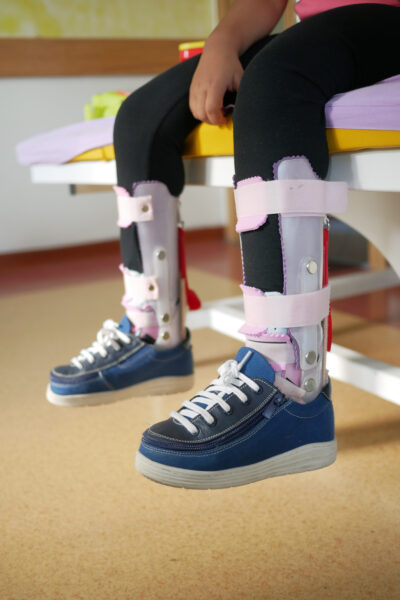
Orthotic recommendations can be a confusing and contentious area. School-based therapists have critical information about students’ functional needs, but their valuable input is too often overlooked during the orthotic decision-making process. Increase your fluency in orthotic terminology, principles, and evidence to advocate for the most appropriate orthotic prescription, design, and dosage for your students.
LEARNING OBJECTIVES:
- Utilize a logical system of orthotic terminology to effectively communicate across teams.
- Differentiate coronal versus sagittal plane orthotic design, based on the available evidence
- Apply the ICF Model as a framework to develop individualized plans for each student.
AUDIENCE:
School-based therapists including OTs, PTs, SLPs and Special Educators.
COURSE OUTLINE:
- Evidence-informed practice for pediatric orthotic recommendations
- Challenges to evidence-based practice
- Theories of Intervention
- Defining “effective”
- Patients excluded from studies
- ICF Model
- Orthotic terminology
- Review of Relevant Evidence
- Excessive pronation
- Weakness
- Neuroplastic changes
- Impact on Developing Systems
- Goals of Orthotic Intervention
- Musculoskeletal:
- Lessen the impact of cumulative micro-trauma due to sustained alignments or repeated movements
- Externally support hypermobile structures in the movement system which have become the path of least resistance for ground reaction forces
- Direct forces toward target structures to increase their relative flexibility
- Restrict or resist motions in planes not efficient for optimal biomechanics
- Neuromotor
- Influence neuromuscular activation patterns during gait and other weightbearing activities
- Influence sensory input
- Provide massed practice of target skills to improve motor control
- Activities and Participation: Improve function, efficiency, safety
- Defining Orthotic Groups
- Group 1: Foot orthoses
- Group 2: Supra-malleolar orthoses
- Group 2+: SMO +
- Group 3: AFOs with motion
- Group 4: Solid AFOs
- Group 4: Dynamic solid AFOs
- Group 5: Sagittal-plane only
- KAFOs and beyond
- Coronal Plane Decision Making
- Key question: What support is required to correct alignment of hindfoot and midfoot in the frontal (and transverse) planes to allow dorsiflexion to occur at primarily the talocrural joint?
Patient groups:
- Neutral hindfoot
- Pronated hindfoot
- Supinated hindfoot
- Sagittal Plane Decision Making
- Stance: What support does the lower extremity require for:
- Loading response: stability and shock absorption
- Midstance: stable, efficient shank angl
Patient groups:
- Shank angle WFL
- Excessively inclined shank
- Excessively reclined shank
- Terminal stance: therapeutic gait with functional gastrocsoleus elongation
- Swing:
- Foot clearance
- Limb positioning in terminal swing to prepare for efficient initial contact
- Posting intervention in the sagittal plane
- Case-studies: applying Coronal and Sagittal Plane Decision Making
- Case 1: Coronal correction only
- Case 2: Shank WFL (Toe walking)
- Case 3: Excessively inclined shank (Crouch)
- Case 4: Excessively reclined shank (Knee hyperextension)
- Case 5: Primary muscular weakness (muscular dystrophy)
- Comprehensive orthotic recommendations
- Systems screening
- Personal factors
- Minimizing Negative Impacts of Orthotic Intervention on Activities, Participation, and Personal Factors
- Dosage
- Post-test
Amanda Hall, PT, MPT, PCS, began teaching clinical education with serial therapeutic casting courses, and has since developed additional coursework based on an integrative approach to treatment for patients with pediatric and neurological health conditions. Her clinical practice is at the Rehabilitation and Specialized Care of Children’s National Hospital (formerly the HSC Pediatric Center) in Washington, DC, where she specializes in treating “outliers” and patients with complex presentations. Her framework is grounded in PNF principles, therapeutic alliance, neuroplasticity, manual therapy, therapeutic gait, and developmental kinesioplasticity. Her framework has a strong focus in patient-centered treatment and adaptive design. As a result, she has received international media attention as the “Madcaster.” Notable presentations include the Combined Sections Meeting of the American Physical Therapy Association, the APTA Pediatrics Annual Conference, and at the National Institutes of Health. She graduated with her Master of Physical Therapy from the University of Washington in 2001 and received her Board-Certification as a Pediatric Clinical Specialist in 2010.
Financial Disclosure: Amanda Hall receives an honorarium from Education Resources, Inc.
Non-Financial Disclosure: Amanda Hall has no relevant non-financial relationships to disclose.
Once you purchase an online course you will have access to the course materials. If you have purchased this course, please ensure you have logged in to your account in order to take the exam.
Once you purchase an online course, you will have the opportunity to take an exam to test your retention of the material. If you have purchased this course, please ensure you have logged in to your account in order to take the exam. The exam must be completed with a pass rate of 80% or more in order to receive your certificate of attendance.
Continuing Education Hours for disciplines not listed below: 3 contact hours (0.3 CEUs). Intermediate level. License #______________.
Education Resources Inc. is an AOTA Approved Provider of professional development. Course approval ID# 13946. This Distance Learning-Independent Course is offered at 3 contact hours 0.3 CEUs (Intermediate Level, OT Service Delivery, Foundational Knowledge & Professional Issues). AOTA does not endorse specific course content, products or clinical procedures. This course can be used toward your NBCOT renewal requirements for 3 units. Provider for the FL Occupational Therapy Association CE Broker for 3.5 CE Hours - approval #____. This course has been approved by the MD State Board of Physical Therapy Examiners for __ Continuing Education Hours. This session applies 3 CE hours toward approval but must be combined with entire Program B sessions to receive approval by the MN Board of PT, #___. Approval #___ by the NJ State Board of Physical Therapy Examiners for 3 CECs. Approved sponsor by the State of IL Department of Financial and Professional Regulation for Physical Therapy for 3.5 contact hours. Approved provider by the NY State Board of PT for 3.6 contact hours (0.36 CEUs). Education Resources is an approved agency by the PT Board of CA for 3 contact hours. This activity is provided by the TX Board of PT Examiners accredited provider #2810017TX for 3 CCUs and meets continuing competence requirements for PTs and PTAs licensure renewal in TX. Approved Provider for OK State Board of Medical Licensure & Supervision #BAP202310003. Approved Provider by the NM Board of Physical Therapy for 3 CE Hours. 3 hours of this course qualify towards the discipline-specific hours for the 20-hour requirement for NDTA re-certification. They do NOT qualify towards the 8-hour NDTA Instructor requirement for re-certification.
Education Resources Inc., 266 Main Street, Suite 12, Medfield, MA 02052 508-359-6533