COURSE DESCRIPTION:
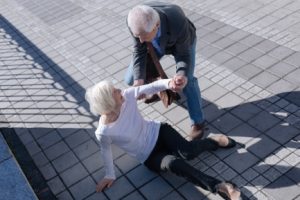
Symptoms of “dizziness” are the number 3 reason individuals over the age of 65 seek medical attention. It becomes the number 1 reason for seeking care in individuals over the age of 70. Medical or surgical management is often not indicated or helpful, but many of these individuals do benefit from vestibular rehabilitation techniques. In addition, 50% of the individuals over the age of 65 with dizziness will develop a form of vertigo that can be alleviated with one simple therapy treatment. These individuals with vertigo and dysequilibrium represent a large patient population for physical and occupational therapy. This course will focus on the assessment and treatment of patients with vertigo and disequilibrium from vestibular causes. Specific emphasis will be placed on the assessment and treatment of unilateral and bilateral vestibular hypofunction, benign paroxysmal positioning vertigo, central vestibular disorders, and multisensory dizziness. This information is applicable to a large patient population including geriatric patients as well as individuals with CNS lesions such as multiple sclerosis, CVA, and head injury.
LEARNING OBJECTIVES:
- Identify the normal anatomy and physiology of the vestibular system
- Identify the impact of a vestibular lesion on normal function
- Identify the eye movements which are indicative of peripheral vestibular hypofunction including direction fixed horizontal nystagmus, head shaking induced nystagmus, abnormal head thrust test
- Identify the eye movements which are indicative of central vestibular disorders including direction changing nystagmus, vertical nystagmus, impaired VOR cancellation, saccadic pursuit, hypometric, hypermetric, or slowed saccades
- Identify the eye movements which are indicative of posterior, anterior and horizontal canal BPPV (canalithiasis and cupulolithiasis)
- Differentiate between unilateral vestibular hypofunction, bilateral vestibular hypofunction, BPPV, Meniere’s disease, motion provoked dizziness based, and non-vestibular causes of dizziness based on the patient’s presenting history and symptoms.
- Differentiate between unilateral vestibular hypofunction, bilateral vestibular hypofunction, BPPV, Meniere’s disease, motion provoked dizziness, central vestibular disorders and non-vestibular causes of dizziness based on the patient’s clinical examination
Also available Advanced Vestibular Rehabilitation Online Series to serve as days 3 and 4 of this course. We hope you will take your skills to the next level with this engaging series taught by international expert Richard Clendaniel.
The course will focus on the assessment and treatment of patients with vertigo and dysequilibrium from unusual vestibular causes. The course is designed for clinicians (PT & OT) with prior vestibular rehabilitation course work and clinical experience. Material covered will include advanced techniques for treating anterior and horizontal canal BPPV, central causes of dizziness (including concussion), identification and treatment of cervicogenic dizziness, chronic subjective dizziness, migraine and other unusual vestibular disorders. This series is one course with 7 short video sessions. Each videos session is 1.5-2 hours.
__________________________________________________________________________________
SCHEDULE:
4 hours: Introduction, Demographics, Anatomy & Physiology:
- Impact of lesions on normal function and common pathologies
1.5 hours History & Clinical Exam:
- Lecture – Signs and Symptoms of Vestibular Disorders-Clinical Exam and Interpretation
- Identification of normal & abnormal eye movements (video cases)
- Oculomotor Exam
- Direction of nystagmus during testing
3.5 hours Treatment: From Assessment to Treatment:
- Treatment rationale
- Potential and Time Course for Recovery
- Treatment Strategies
- Patients with incomplete lesions
- Patients with complete lesions
- Patients with motion provoked dizziness
2 hours Treatment Strategies (cont.):
- Treatment considerations for central vestibular disorders
- BPPV: pathophysiology & treatment (all canals)
- Case Studies & Summary
30 minutes for Post Test
Richard Clendaniel, PT, PhD, FAPTA is an assistant professor in the Department of Orthopedic Surgery, Doctor of Physical Therapy Division, and in the Department of Head & Neck Surgery and Communication Sciences at the Duke University School of Medicine. He received his MS in Physical Therapy and Ph.D. in Behavioral Neuroscience from the University of Alabama at Birmingham and completed a post-doctoral fellowship in neuro-otology with Susan Herdman, PhD, PT. He previously served as director of the Vestibular Rehabilitation program at Johns Hopkins University School of Medicine, Department of Otolaryngology - Head and Neck Surgery. He is on the medical advisory board for the Vestibular Disorders Association (VEDA) and on the board of directors for the American Balance Society. Dr. Clendaniel maintains an active practice treating patients with vestibular disorders and dizziness. His research is in the assessment of the vestibular system and the plasticity of the vestibular system following injury.
Once you purchase an online course you will have access to the course materials. If you have purchased this course, please ensure you have logged in to your account in order to take the exam.
Once you purchase an online course, you will have the opportunity to take an exam to test your retention of the material. If you have purchased this course, please ensure you have logged in to your account in order to take the exam. The exam must be completed with a pass rate of 80% or more in order to receive your certificate of attendance.
Continuing Education Hours for disciplines not listed below: 11.5 contact hours (1.15 CEUs). Introductory level. License #______________.
Education Resources Inc. is an AOTA Approved Provider of professional development. Course approval ID#03531. This Distance Learning-Independent course is offered at 11.5 contact hours 1.15 CEUs (Introductory Level, OT Service Delivery & Foundational Knowledge). AOTA does not endorse specific course content, products or clinical procedures. This course meets the approval of the TX Board of OT Examiners. This course can be used toward your NBCOT renewal requirements for 11.5 units. Approved for FL Occupational Therapists for 13.5 continuing education hours, #20-912583.
Approval #2203-111 by the NJ State Board of Physical Therapy Examiners for 11.5 CEC's. This course has been approved by the MD State Board of Physical Therapy Examiners for 1.15 CEUs. Approved sponsor by the State of IL Department of Financial and Professional Regulation for Physical Therapy for 13.5 contact hours. Approved provider by the NY State Board of Physical Therapy for 13.5 contact hours (1.35 CEUs). Education Resources is an approved agency by the PT Board of CA for 11.5 contact hours. This activity is provided by the TX Board of PT Examiners accredited provider #1910017TX for 11.5 CCUs and meets continuing competence requirements for PTs and PTAs licensure renewal in TX. Approved Provider for OK State Board of Medical Licensure & Supervision #BAP202310003.
11.5 hours of this course qualify toward the 20 hours requirement for NDTA re-certification.
The following state boards of physical therapy accept other states’ approval: AK, AR, AZ, DC, DE, GA, HI, ID, IN, KS,KY, MA, MI, MO, MS, NC, OR, PA, RI, SC, UT, VA, VT, WI, WY. The following state boards of physical therapy either do not require course pre-approval or do not require CEUs for re-licensure: AL, CO, CT, IA, ME, MT, NE, ND, NH, SD, WA.
Education Resources Inc. 266 Main Street, Medfield Ma 02052 800-487-6530