Invest in Your Professional Growth and Save
Exclusive offers for first-time registrants, loyal customers, group rates and bundled courses. Interested in hosting a CEU course? Train your team at a discounted rate while earning credits.
Live Webinar for Therapists. Complete This Session for 2 Contact Hours (0.2 CEUs).
June 17, 2026
6:30 pm EST • 5:30 pm CST • 4:30 pm MST • 3:30 pm PST (US)
COURSE DESCRIPTION:
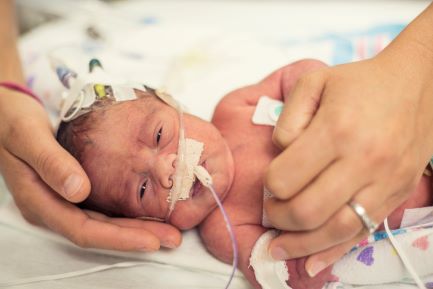
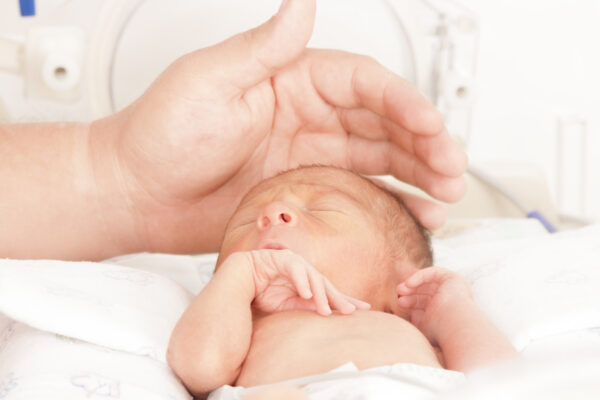
Newborns, struggling to survive from prematurity, heart/lung conditions, rare syndromes, etc.,
work hard to breathe. This often creates atypical mechanical forces on their rapidly developing
chest walls and may result in acquired chest wall deformities. We’ll look at how the chest wall
develops in healthy 0 – 12 month old babies and compare that to infants struggling to survive
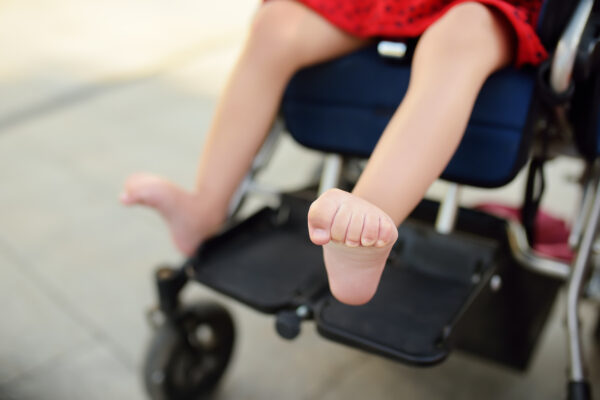
(increase work of breathing). We’ll follow at-risk children for secondary chest wall deformities
and reflect on clinical signs that therapists could use to screen babies/young children for earlier
interventions. We will also discuss congenital chest wall deformities vs. acquired deformities.
Is there a difference in how you would approach these conditions? Finally, we will follow some
long term cases to see what interventions might contribute to positive postural and/or structural
changes in congenital vs. acquired chest deformities.
LEARNING OBJECTIVES:
- Identify normal chest wall development trends of 0 – 12 month, healthy, full-term infants.
- Identify adverse biomechanical forces that contribute to consequential chest wall
deformities for infants/young children with conditions that cause them to increase their
work of breathing or other survival strategies.
- Identify the difference between congenital and acquired chest wall deformities and how
the origin of the chest deformity might change how you treat that child.
- Choose clinical screening tests for your clients to identify signs of at-risk secondary chest
wall deformities.
- Correlate consequential chest wall deformities to potential adverse health and postural development impacting mobility and participation in daily activities through long-term case studies.
- Apply therapy interventions to mitigate (as able) atypical biomechanical forces on infant and young children’s developing chest walls and resultant posture promoting improved health and participation in childhood activities.
AUDIENCE:
PTs, OTs and SLPs who work in pediatrics from birth to young adults.
Dr. Massery, PT, DPT, DSc, received her BS in Physical Therapy from Northwestern University in 1977, her DPT from the University of the Pacific in 2004 and her DSc from Rocky Mountain University in 2011. Her publications and interests focus on linking motor behaviors to breathing and/or postural mechanics in both pediatric and adult patient populations. Dr. Massery has been invited to give over 1,000 professional presentations in all 50 US states and in 18 countries worldwide, including more than 100 presentations for the American Physical Therapy Association. Mary’s research pioneered the concept of managing trunk pressures as a new way to visualize core stabilization. She has delivered keynote and major addresses on topics such as cystic fibrosis and posture, pectus excavatum (chest deformities), connections between posture & breathing, and PNF (proprioceptive neuromuscular facilitation).
Mary has received national awards from the APTA, including its highest clinical award, The Florence Kendall Practice Award, honoring “one’s outstanding and enduring contributions to the practice of physical therapy." She has been honored as Outstanding Alumnus of the Year by each of her 3 universities. She was also awarded Northwestern University’s Alumnae Research Achievement Award. Mary continues to maintain a private practice in Chicago, specializing in breathing and postural dysfunction.
Financial Disclosure: Mary Massery receives an honorarium from Education Resources, Inc.
Non-Financial Disclosure: Mary Massery has no relevant non-financial relationships to disclose.
VENUE LOCATION MAP
Click image to access Google Maps.
This course meets the criteria for 2 contact hours (0.2 CEUs) Intermediate Level.
To receive a certificate of completion all registered attendees are required to attend and participate fully in all applicable course activities (i.e., labs, discussions, group work, polls, post-tests with passing grade of 80% or greater etc.) and complete the evaluation form.
Education Resources Inc. is an AOTA Approved Provider of professional development. This Distance Learning-Interactive course is pending AOTA approval for 2 contact hours 0.2 CEUs (Intermediate Level, OT service delivery, Foundational Knowledge). AOTA does not endorse specific course content, products, or clinical procedures.
This course can be used toward your NBCOT renewal requirements for 2 units.
Approved provider of the FL Board of Occupational Therapy-CE Broker – 2 hrs. This course meets the approval of the TX Board of OT Examiners.
ASHA CE Provider (Intermediate level) 0.2 ASHA CEUs. ASHA CE Provider approval and use of the Brand Block does not imply endorsement of course content, specific products, or clinical procedures. SLPs that require ASHA must submit your ASHA participant form to ERI.ASHA participant form to ERI.
ASHA credits are accepted by the TX Department of License and Renewal.
Application has been made to the NJ Board of Physical Therapy Examiners.
Approved sponsor by the State of IL Department of Financial and Professional Regulation for Physical Therapy for 2 contact hours. Application has been made to the Illinois EI Training Program. Approved provider by the NY State Board of Physical Therapy for 2.4 contact hours (2.4 CEUs).
Education Resources, Inc. is an approved provider for Physical Therapy CEUs in the following states: CA, NM, OK, TX and the assignment does not imply endorsement of specific course content, products, or clinical procedures for these.
The following state boards of physical therapy accept other states’ approval: AK, AR, AZ, DC, DE, GA, HI, ID, IN, KS, KY, MA, MI, MO, MS, NC, OR, PA, RI, SC, UT, VA, VT, WI, WY. The following state boards of physical therapy either do not require course pre-approval or do not require CEUs for re-licensure: AL, CO, CT, IA, ME, MT, NE, ND, NH, SD, WA.
2 hours of this course qualify towards the discipline-specific hours for the 20-hour requirement for NDTA re-certification. They do NOT qualify towards the 8-hour NDTA Instructor requirement for re-certification.
This course meets the criteria for 2 hours that can be applied toward the Neonatal Therapy National Certification.
Education Resources Inc. 266 Main St, Suite 12, Medfield, MA 02052 • 800-487-6530